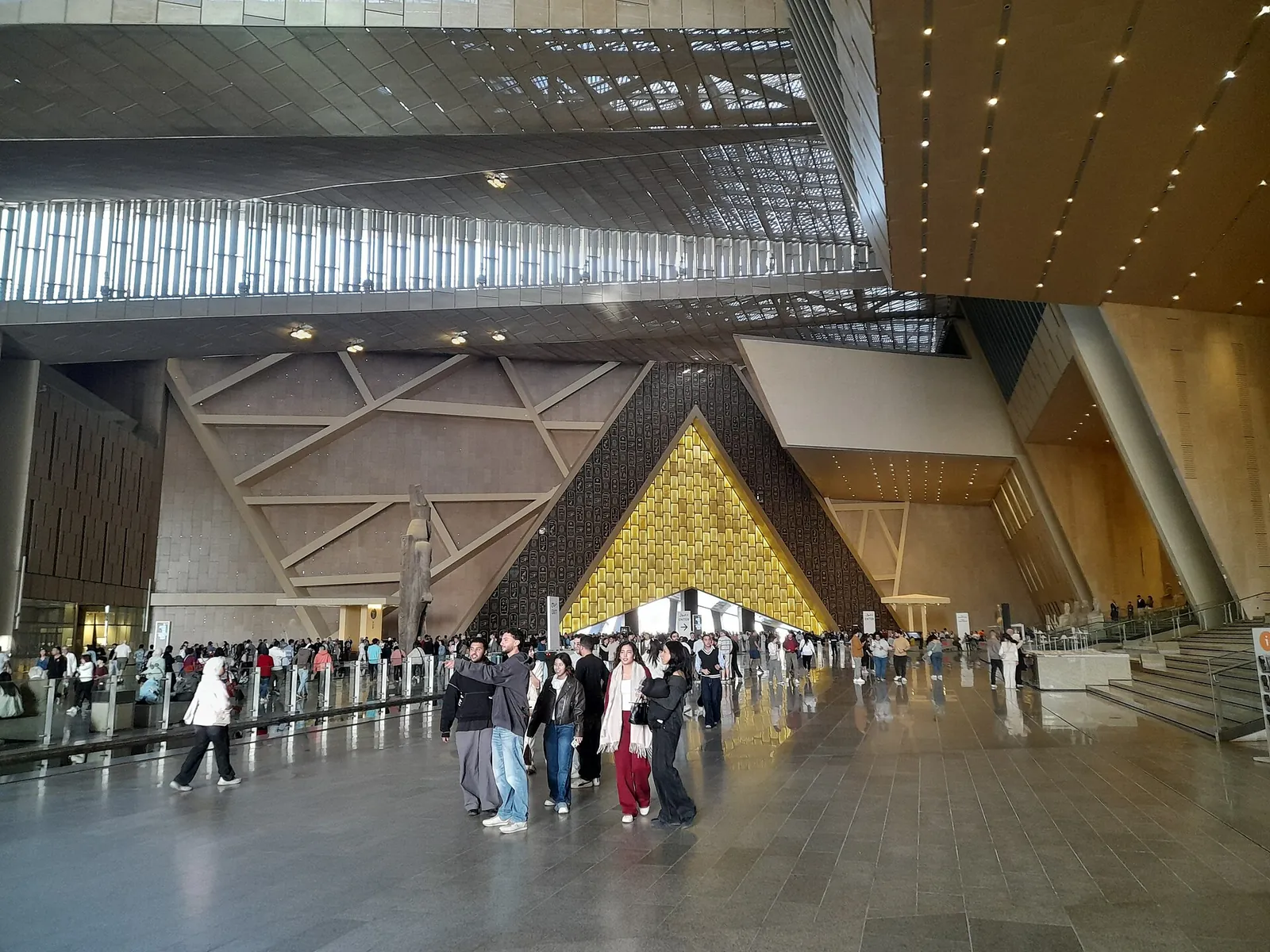
A pace-first route for a monumental museum: arrival, orientation, the Grand Staircase, collection choices, breaks and a deliberate finish. This manual separates route advice from operational details that require direct confirmation.
STAGE 01 / GEM-01
Commit to a question
Before buying or travelling, decide whether your priority is royal image, funerary practice, material technique or a broad first encounter.
Save the official visitor page and current ticket conditions.
Route action
Choose a clear stopping point and the transition that leads to it.
Look for
Record one material detail, one spatial decision and one unanswered question.
Do not assume
Gallery availability, object location and access conditions can change.
Exit condition
Move on when attention falls, not when every case has been photographed.
Field procedure
- Orient without rushing into the first dense gallery.
- Read the room before selecting an object.
- Separate observation from interpretation.
- Save the object number or official record.
ROUTE NOTE 1Before buying or travelling, decide whether your priority is royal image, funerary practice, material technique or a broad first encounter. Translate that principle into one decision for your actual visit date.
STAGE 02 / GEM-01
Arrive at the real entrance
Map the visitor entrance, security sequence and meeting point rather than the centre of the museum complex.
Confirm transport drop-off, permitted bags and your timed entry.
Route action
Choose a clear stopping point and the transition that leads to it.
Look for
Record one material detail, one spatial decision and one unanswered question.
Do not assume
Gallery availability, object location and access conditions can change.
Exit condition
Move on when attention falls, not when every case has been photographed.
Field procedure
- Orient without rushing into the first dense gallery.
- Read the room before selecting an object.
- Separate observation from interpretation.
- Save the object number or official record.
ROUTE NOTE 2Map the visitor entrance, security sequence and meeting point rather than the centre of the museum complex. Translate that principle into one decision for your actual visit date.
STAGE 03 / GEM-01
Use the Grand Staircase as orientation
Treat monumental sculpture as a sequence of scale, pose and kingship—not as a queue of photo stops.
Notice sightlines, labels and where the route asks you to pause.
Route action
Choose a clear stopping point and the transition that leads to it.
Look for
Record one material detail, one spatial decision and one unanswered question.
Do not assume
Gallery availability, object location and access conditions can change.
Exit condition
Move on when attention falls, not when every case has been photographed.
Field procedure
- Orient without rushing into the first dense gallery.
- Read the room before selecting an object.
- Separate observation from interpretation.
- Save the object number or official record.
ROUTE NOTE 3Treat monumental sculpture as a sequence of scale, pose and kingship—not as a queue of photo stops. Translate that principle into one decision for your actual visit date.
STAGE 04 / GEM-01
Choose one collection thread
Follow a material or historical question through a limited group of galleries.
Check current gallery availability and object locations.
Route action
Choose a clear stopping point and the transition that leads to it.
Look for
Record one material detail, one spatial decision and one unanswered question.
Do not assume
Gallery availability, object location and access conditions can change.
Exit condition
Move on when attention falls, not when every case has been photographed.
Field procedure
- Orient without rushing into the first dense gallery.
- Read the room before selecting an object.
- Separate observation from interpretation.
- Save the object number or official record.
ROUTE NOTE 4Follow a material or historical question through a limited group of galleries. Translate that principle into one decision for your actual visit date.
STAGE 05 / GEM-01
Protect the second half
Take a real seated break before attention collapses; reduce the route instead of accelerating.
Locate restrooms, food and permitted re-entry before you need them.
Route action
Choose a clear stopping point and the transition that leads to it.
Look for
Record one material detail, one spatial decision and one unanswered question.
Do not assume
Gallery availability, object location and access conditions can change.
Exit condition
Move on when attention falls, not when every case has been photographed.
Field procedure
- Orient without rushing into the first dense gallery.
- Read the room before selecting an object.
- Separate observation from interpretation.
- Save the object number or official record.
ROUTE NOTE 5Take a real seated break before attention collapses; reduce the route instead of accelerating. Translate that principle into one decision for your actual visit date.
STAGE 06 / GEM-01
Finish with one return
Revisit one object after the wider route and write down what changed in your understanding.
Save the museum collection record for follow-up reading.
Route action
Choose a clear stopping point and the transition that leads to it.
Look for
Record one material detail, one spatial decision and one unanswered question.
Do not assume
Gallery availability, object location and access conditions can change.
Exit condition
Move on when attention falls, not when every case has been photographed.
Field procedure
- Orient without rushing into the first dense gallery.
- Read the room before selecting an object.
- Separate observation from interpretation.
- Save the object number or official record.
ROUTE NOTE 6Revisit one object after the wider route and write down what changed in your understanding. Translate that principle into one decision for your actual visit date.
DETACHABLE FIELD CARD
Write this before entering
My one question
____________________________________________
My three priority stops
____________________________________________
My planned break
____________________________________________
My exit condition
____________________________________________
My verified source
____________________________________________
My flexible alternative
____________________________________________
SOURCE CONTROL
Verification trail
- Official museum visitor page.
- Official collection or exhibition record.
- Current access and photography policy.
- Documentary image creator and reuse licence.
Last editorial review: 16 July 2026. No unrecorded personal visit is claimed.