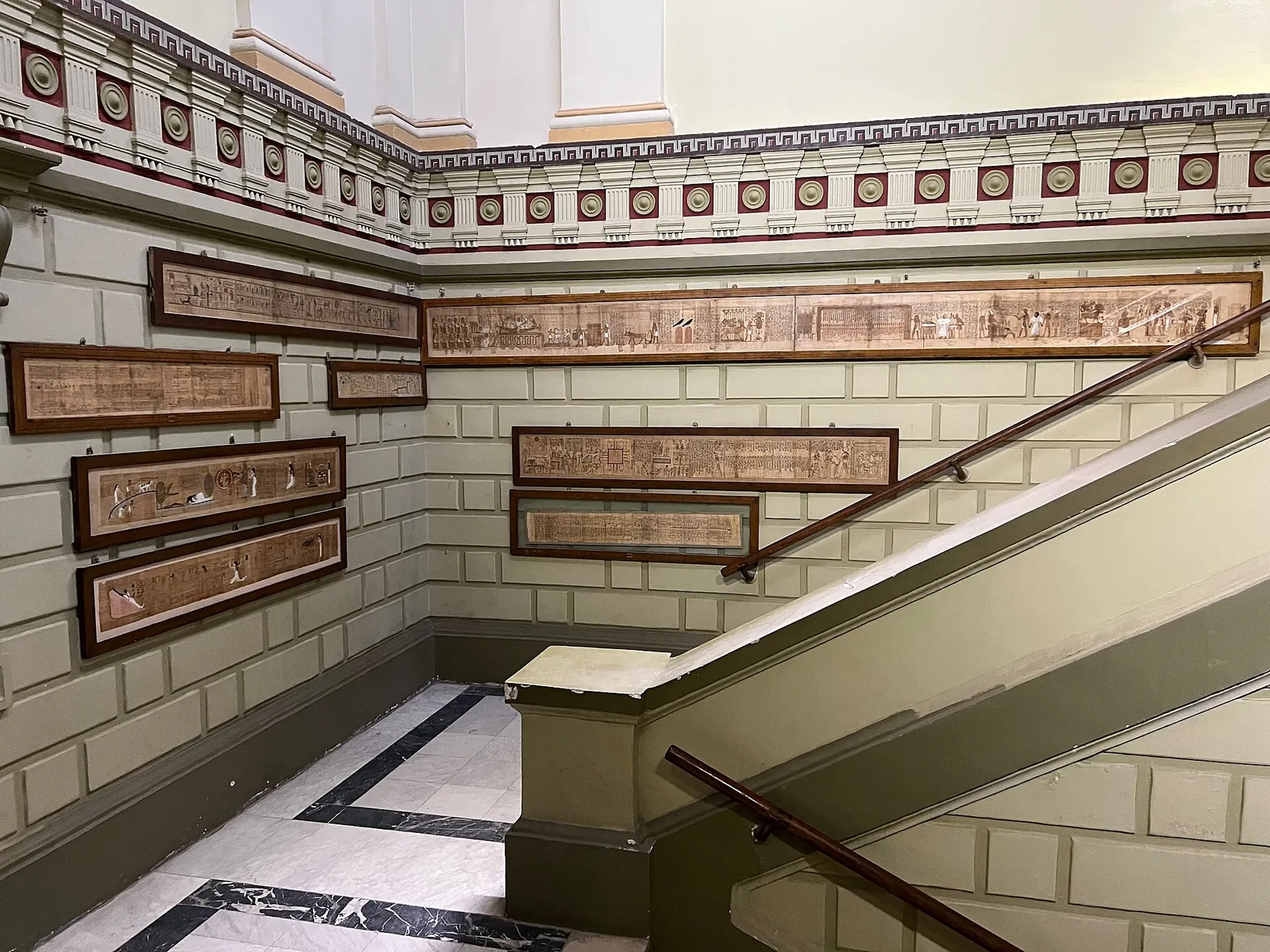
How to read a historic museum without demanding a contemporary display: chronology, dense galleries, collecting history and slow object selection. This manual separates route advice from operational details that require direct confirmation.
STAGE 01 / EMC-02
Read the building first
The 1902 museum is part of the story. Begin with plan, light, cases and the institutional history visible in the rooms.
Confirm which entrances and galleries are operating.
Route action
Choose a clear stopping point and the transition that leads to it.
Look for
Record one material detail, one spatial decision and one unanswered question.
Do not assume
Gallery availability, object location and access conditions can change.
Exit condition
Move on when attention falls, not when every case has been photographed.
Field procedure
- Orient without rushing into the first dense gallery.
- Read the room before selecting an object.
- Separate observation from interpretation.
- Save the object number or official record.
ROUTE NOTE 1The 1902 museum is part of the story. Begin with plan, light, cases and the institutional history visible in the rooms. Translate that principle into one decision for your actual visit date.
STAGE 02 / EMC-02
Establish chronological anchors
Choose a small number of dated objects to orient the ground-floor route.
Do not assume an older guidebook reflects current display locations.
Route action
Choose a clear stopping point and the transition that leads to it.
Look for
Record one material detail, one spatial decision and one unanswered question.
Do not assume
Gallery availability, object location and access conditions can change.
Exit condition
Move on when attention falls, not when every case has been photographed.
Field procedure
- Orient without rushing into the first dense gallery.
- Read the room before selecting an object.
- Separate observation from interpretation.
- Save the object number or official record.
ROUTE NOTE 2Choose a small number of dated objects to orient the ground-floor route. Translate that principle into one decision for your actual visit date.
STAGE 03 / EMC-02
Stop at monumental sculpture
Use scale, stone, pose and surface to compare royal images without photographing every statue.
Record object numbers when labels provide them.
Route action
Choose a clear stopping point and the transition that leads to it.
Look for
Record one material detail, one spatial decision and one unanswered question.
Do not assume
Gallery availability, object location and access conditions can change.
Exit condition
Move on when attention falls, not when every case has been photographed.
Field procedure
- Orient without rushing into the first dense gallery.
- Read the room before selecting an object.
- Separate observation from interpretation.
- Save the object number or official record.
ROUTE NOTE 3Use scale, stone, pose and surface to compare royal images without photographing every statue. Translate that principle into one decision for your actual visit date.
STAGE 04 / EMC-02
Move upstairs with a new question
Shift from chronology to funerary assemblage, daily life or craft rather than repeating the same route logic.
Check temporary closures before committing to a specific object.
Route action
Choose a clear stopping point and the transition that leads to it.
Look for
Record one material detail, one spatial decision and one unanswered question.
Do not assume
Gallery availability, object location and access conditions can change.
Exit condition
Move on when attention falls, not when every case has been photographed.
Field procedure
- Orient without rushing into the first dense gallery.
- Read the room before selecting an object.
- Separate observation from interpretation.
- Save the object number or official record.
ROUTE NOTE 4Shift from chronology to funerary assemblage, daily life or craft rather than repeating the same route logic. Translate that principle into one decision for your actual visit date.
STAGE 05 / EMC-02
Notice museum history
Dense cases and historic labels reveal earlier museum priorities as well as ancient material.
Separate outdated interpretation from valuable display history.
Route action
Choose a clear stopping point and the transition that leads to it.
Look for
Record one material detail, one spatial decision and one unanswered question.
Do not assume
Gallery availability, object location and access conditions can change.
Exit condition
Move on when attention falls, not when every case has been photographed.
Field procedure
- Orient without rushing into the first dense gallery.
- Read the room before selecting an object.
- Separate observation from interpretation.
- Save the object number or official record.
ROUTE NOTE 5Dense cases and historic labels reveal earlier museum priorities as well as ancient material. Translate that principle into one decision for your actual visit date.
STAGE 06 / EMC-02
Leave before visual fatigue
Choose a final room and one object to remember; the museum rewards return visits.
Verify any planned follow-up museum separately.
Route action
Choose a clear stopping point and the transition that leads to it.
Look for
Record one material detail, one spatial decision and one unanswered question.
Do not assume
Gallery availability, object location and access conditions can change.
Exit condition
Move on when attention falls, not when every case has been photographed.
Field procedure
- Orient without rushing into the first dense gallery.
- Read the room before selecting an object.
- Separate observation from interpretation.
- Save the object number or official record.
ROUTE NOTE 6Choose a final room and one object to remember; the museum rewards return visits. Translate that principle into one decision for your actual visit date.
DETACHABLE FIELD CARD
Write this before entering
My one question
____________________________________________
My three priority stops
____________________________________________
My planned break
____________________________________________
My exit condition
____________________________________________
My verified source
____________________________________________
My flexible alternative
____________________________________________
SOURCE CONTROL
Verification trail
- Official museum visitor page.
- Official collection or exhibition record.
- Current access and photography policy.
- Documentary image creator and reuse licence.
Last editorial review: 16 July 2026. No unrecorded personal visit is claimed.